
MAGA Win! We’ve All Been Waiting For This
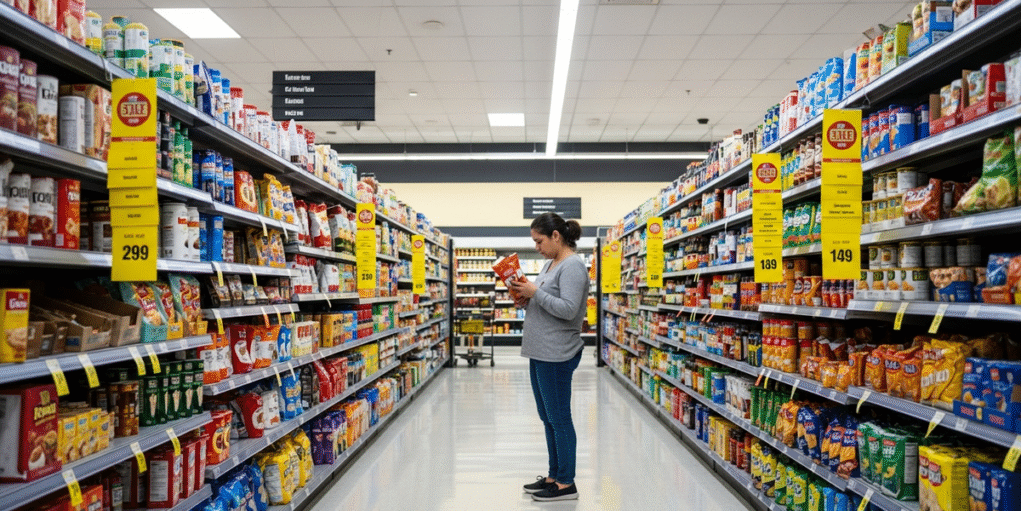
Remember when every economist with a cable news contract told you that Trump’s tariffs would send prices through the roof? That your grocery bill would double? That inflation was about to come roaring back the moment tariffs hit?
The companies that actually set prices just filed their answer. And it’s not what the doomsayers predicted.
The Cleveland Federal Reserve’s Survey of Firms’ Inflation Expectations — released Tuesday — shows businesses expect general inflation of just 3.1% over the next twelve months. That’s down from a peak of 3.9% last year. For context, during Biden’s term, that same figure climbed above 7%.
The Atlanta Fed’s numbers are even better. Companies expect their own unit costs to rise by just 2.0% in the year ahead — down from 2.8% earlier in 2025. That’s approaching pre-inflation levels. The numbers businesses were reporting during the 2022-2023 price surge? Above 5%.
The trend isn’t ambiguous. Inflation expectations are falling. Uncertainty around those expectations is falling. And the companies doing the actual producing and pricing are telling the Federal Reserve they think the worst is over.
The Tariff That Didn’t Bite
This is the part that should end a thousand bad takes. Core consumer goods — the category most directly exposed to tariff-driven inflation — rose just 1.1% in the twelve months through January. One point one percent. On the category that was supposed to be ground zero for tariff pain.
The experts said tariffs would jack up prices. The data says they didn’t. And a recent study of historical tariff impacts found that rising import duties are actually associated with falling inflation — the exact opposite of what the consensus predicted.
How? Hoover Institution economist John Cochrane offers a framework that makes the math work. Tariffs bring in revenue. Hundreds of billions of dollars in revenue. That fiscal improvement — higher expected government income relative to spending — strengthens the government’s fiscal position and, in Cochrane’s model, actually pushes inflation lower than it would be without tariffs.
Current projections based on Trump’s tariff policy estimate roughly $4 trillion in gross duties over the next decade. That’s not a rounding error. That’s a structural shift in federal revenue that changes the inflation calculus in ways the “tariffs cause inflation” crowd never bothered to model.
PepsiCo Gets the Message
The corporate world isn’t just expecting lower inflation. It’s acting on it. PepsiCo — a nearly $30 billion company — announced this month that it’s cutting prices on Cheetos, Doritos, and Lay’s. Not raising them. Cutting them.
CEO Ramon Laguarta explained why: “There are consumers out there that are looking for us to give them excuses to come into the category.” Affordability has become “the biggest friction” for low- and middle-income consumers.
That’s the market doing what markets do. During the Biden inflation years, companies pushed double-digit price increases and consumers had no choice but to absorb them. Now the dynamic has flipped. Consumers are pushing back. Volume is declining. And companies are responding by competing on price instead of padding margins.
PepsiCo hiked prices by double digits in both 2022 and 2023. Now they’re cutting. That’s not corporate charity. That’s a company reading the room and realizing that the pricing power they enjoyed during inflation is gone — because inflation itself is fading.
The Confidence Factor
The most important number in the Cleveland Fed survey isn’t the inflation expectation itself. It’s the standard deviation — the measure of how much disagreement exists among the companies being surveyed. That figure fell to 0.7 percentage points, the lowest in the data series.
That means companies aren’t just expecting lower inflation. They agree on it. The uncertainty that characterized the 2022-2023 period — when nobody knew if prices would stabilize or keep climbing — has been replaced by something that looks a lot like confidence.
When businesses are confident that prices will stay manageable, they make different decisions. They invest. They hire. They plan for growth instead of hunkering down for the next shock. Confidence in price stability is the foundation of economic expansion, and the Fed’s own surveys show that foundation is solidifying.
The Biden Contrast
During Biden’s term, business inflation expectations hit 7%. Consumer prices surged. Real wages fell. The Federal Reserve was forced into the most aggressive rate-hiking cycle in decades. And the administration’s response was to blame “corporate greed” and “Putin’s price hike” while spending trillions in stimulus that poured gasoline on the fire.
Under Trump, expectations are falling toward pre-crisis levels. Companies are cutting prices. Core goods inflation is barely above 1%. And the tariffs that were supposed to trigger a new inflation wave have instead generated hundreds of billions in revenue while consumer prices remained stable.
The comparison isn’t subtle. One administration created the inflation crisis. The other is presiding over its resolution. And the companies that actually set the prices Americans pay are telling the Fed they expect it to keep getting better.
What the Critics Won’t Say
The economists who predicted tariff-driven inflation aren’t apologizing. They’re not updating their models. They’re not writing op-eds admitting they got it wrong. They’re simply going quiet — waiting for the next opportunity to predict doom and hoping nobody remembers the last prediction that didn’t pan out.
The data is in the Fed surveys. The behavior is in PepsiCo’s price cuts. The revenue is in the tariff receipts. And the American consumer — the person who was supposed to be crushed by Trump’s trade policy — is seeing prices moderate for the first time in years.
They told you tariffs would break the economy. The economy disagrees. And it’s putting it in writing.