
Fed Chairman Under Criminal Investigation
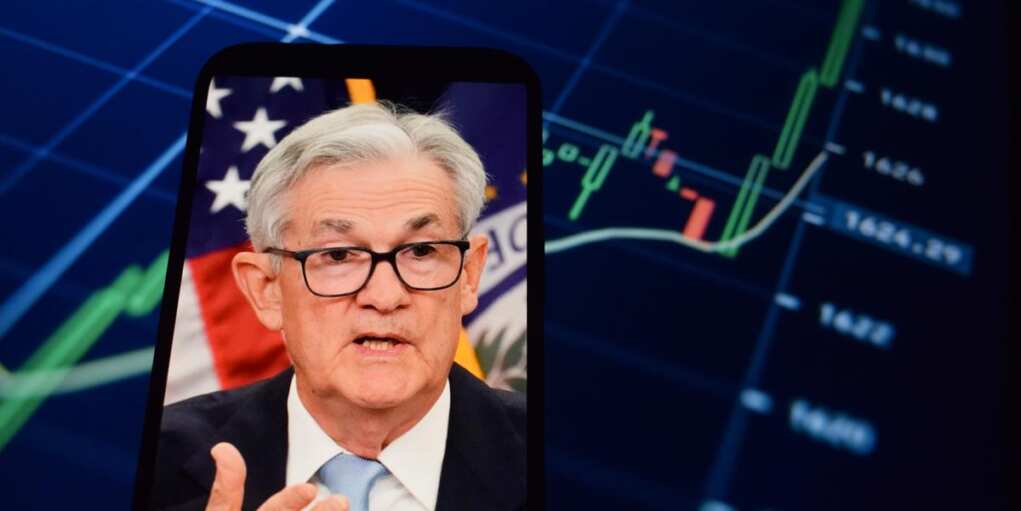
Jerome Powell says he’s being criminally investigated for setting interest rates based on “the public interest” rather than “the preferences of the president.”
That’s one interpretation.
Here’s another: the Fed Chair may have lied to Congress about a $600 million cost overrun on a building renovation, and the Justice Department wants to know why.
Grand Jury Subpoenas Served January 9
Powell confirmed late Saturday that the Federal Reserve was served with grand jury subpoenas by the Department of Justice.
The focus: Powell’s Senate Banking Committee testimony from June 2025, specifically regarding “a multi-year project to renovate historic Federal Reserve office buildings.”
Grand jury subpoenas aren’t parking tickets. They’re issued when prosecutors believe crimes may have been committed and are gathering evidence for potential indictment.
The Fed Chair is facing a criminal investigation. That’s not spin. That’s his own statement.
The Renovation That Exploded in Cost
The Marriner S. Eccles Building on the National Mall was approved for renovation in 2017 with a budget of $1.9 billion.
By 2025, that budget had ballooned to $2.5 billion — a $600 million increase blamed on inflation, asbestos, soil contamination, and “extended timelines.”
Trump toured the construction site with Powell in July 2025. The President noted the $600 million overrun. Powell’s response, in front of reporters: “I’m not aware of that, Mr. President. I haven’t heard that from anybody at the Fed.”
Not aware. Of a $600 million increase. On a project he oversees.
Either Powell didn’t know about a massive cost overrun on his own building project — which would be staggering incompetence — or he did know and told the President otherwise in front of cameras.
That’s the kind of statement that attracts prosecutorial interest.
Powell’s Defense: This Is About Interest Rates
Powell is framing the investigation as political retaliation.
“This unprecedented action should be seen in the broader context of the administration’s threats and ongoing pressure,” he said. “The threat of criminal charges is a consequence of the Federal Reserve setting interest rates based on our best assessment of what will serve the public, rather than following the preferences of the president.”
He called the renovation inquiry a “pretext.”
It’s a clever defense. Powell is positioning himself as a defender of central bank independence against a president who wants to control monetary policy.
But there’s a problem with that narrative: lying to Congress is illegal regardless of your motives.
Trump Has Wanted Lower Rates for Years
Powell isn’t wrong that Trump wants lower interest rates.
The President told The Wall Street Journal in December that the benchmark federal funds rate should be “1 percent and maybe lower than that.” The Fed has only cut 75 basis points since September, leaving rates far above Trump’s preferred level.
Other central banks have cut more aggressively. Trump has complained publicly and repeatedly.
But disagreeing with the President on monetary policy isn’t a crime. Misleading Congress about $600 million in cost overruns might be.
Powell wants to conflate the two. The DOJ appears to be separating them.
Powell’s Term Expires in May
The timing adds pressure.
Powell’s term as Fed Chair expires in May 2026. A search for his successor is already underway. Treasury Secretary Scott Bessent told the Economic Club of Minnesota that Trump will make his decision this month.
Prediction markets favor former Fed Governor Kevin Warsh at 44% odds, followed by National Economic Council Director Kevin Hassett.
Powell was already on his way out. The criminal investigation ensures his departure will be under a cloud.
The Lisa Cook Case
There’s a parallel legal battle playing out at the Supreme Court.
Trump attempted to fire Fed Governor Lisa Cook last summer over allegations of mortgage fraud. The Court temporarily blocked the firing, and oral arguments are scheduled for January 21.
The case will determine whether the President has authority to terminate Fed Board members for any reason — or whether they enjoy protection from removal except for cause.
If Trump wins, central bank independence becomes much weaker. If Powell’s allies win, the Fed retains its insulation from presidential pressure.
The criminal investigation into Powell happens against this backdrop of escalating conflict between the White House and the central bank.
Markets Didn’t Like the News
U.S. stock futures turned negative after Powell’s announcement. The Dollar Index fell. Treasury yields were mixed.
Markets hate uncertainty about central bank leadership. A criminal investigation into the sitting Fed Chair creates exactly that uncertainty.
If Powell is indicted, does he stay in his position through trial? Does he resign? Does the investigation chill Fed decision-making as officials worry about their own legal exposure?
These questions don’t have clear answers. Markets are pricing in the ambiguity.
“No One Is Above the Law”
Powell included a telling line in his statement: “No one — certainly not the chair of the Federal Reserve — is above the law.”
He’s right.
If Powell misled Congress about the renovation costs, that’s a potential crime regardless of his position. Federal officials have been prosecuted for less.
Powell wants to frame this as an attack on Fed independence. But Fed independence doesn’t mean Fed immunity. The central bank isn’t a sovereign nation. Its officials can be investigated, prosecuted, and imprisoned just like anyone else.
The question is whether the investigation is legitimate or pretextual. That’s what the evidence will show.
What Happens Next
The grand jury will gather evidence. Witnesses will be subpoenaed. Documents will be reviewed.
If prosecutors find that Powell knowingly made false statements to Congress, an indictment could follow. If they find the statements were honest mistakes or the cost figures were genuinely unclear, the investigation might close without charges.
Meanwhile, Trump will name a new Fed Chair this month. The Supreme Court will hear the Lisa Cook case. And the relationship between the White House and the central bank will remain toxic.
Powell has four months left in his term. He may spend them fighting for his freedom rather than setting monetary policy.
The Fed Chair Under Criminal Investigation
This is where we are.
The chairman of the Federal Reserve — the most powerful economic policymaker in the world — has been served with grand jury subpoenas.
He says it’s retaliation for not cutting rates. The DOJ says it’s about possible false statements to Congress.
One of them is telling the truth. The other might be facing indictment.
May can’t come fast enough.